
Leave Your Message
-
Contact Phone
-
 Contact Email
When you're picking out the best Nitrile Lab Gloves, it really helps to understand what sets them apart. Dr. Emily Chen, who’s an industry pro over at SafeHands Protective Gear, points out that "Quality gloves are totally essential for safety and accuracy in the lab." Honestly, that just drives home how important it is to make smart choices here.
Nitrile lab gloves are known for some pretty impressive resistance to chemicals and tears—so it's no surprise that lots of lab folks swear by them. But, here’s the thing—not all Nitrile gloves are exactly the same. Things like how thick they are, the size, and how grippy they feel can make a big difference in how well they work for you. And trust me, if a glove doesn’t fit just right, it can totally mess with your safety.
Figuring out which gloves are best often takes a bit of trial and error—trying out different brands can really help you find that sweet spot for your specific needs. It's all about balancing durability with enough flexibility to get your work done comfortably. What works perfectly for one person might not be ideal for someone else, so don’t hesitate to chat with colleagues and swap tips. At the end of the day, in a lab, safety isn’t something you can afford to overlook or take lightly.

When selecting nitrile lab gloves, several factors are crucial for ensuring safety and comfort. The thickness of the gloves affects both sensitivity and protection. Thicker gloves offer more protection but may reduce tactile feel. Consider the tasks you perform. For precision work, thinner gloves might be ideal. However, for handling hazardous materials, a thicker option is essential.
Another important factor is the glove's fit. Gloves that are too loose can cause slippage, while tight gloves may restrict movement. Pay attention to sizing charts provided by manufacturers. Proper fitting enhances dexterity and reduces hand fatigue during extended use. Additionally, look for gloves with textured surfaces. They improve grip, especially when handling small or slippery objects.
Lastly, examine chemical resistance ratings. Not all nitrile gloves provide the same level of protection against various substances. Research potential exposure risks in your lab environment. Choose gloves that are specifically designed to withstand those chemicals. Finding the perfect balance between comfort, protection, and sensitivity requires thoughtful consideration. Your choice impacts both safety and efficiency in your work.
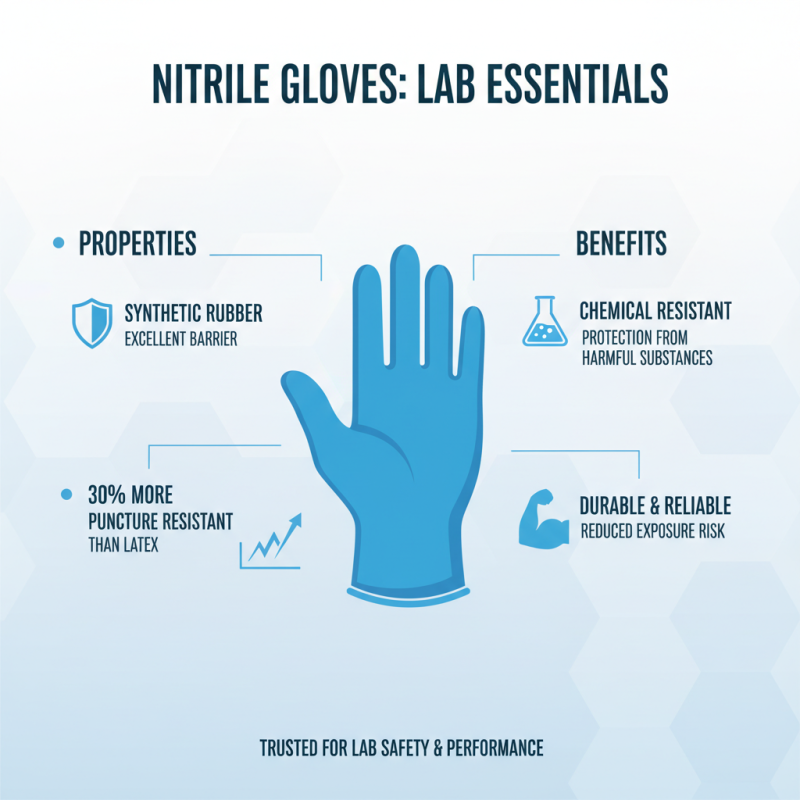
When it comes to lab work, nitrile gloves are a popular choice for their durability and chemical resistance. Nitrile is a synthetic rubber that provides excellent barrier protection. According to industry reports, nitrile gloves offer up to 30% more puncture resistance than latex gloves. This is vital in minimizing exposure to harmful substances.
Nitrile gloves are also latex-free. This makes them ideal for individuals with latex allergies, accommodating a wider range of users. They provide a high degree of tactile sensitivity, essential for precise tasks in laboratory settings. Importantly, nitrile gloves can withstand various chemicals, including solvents and oils, making them versatile across numerous applications.
Tip: Always check the ASTM ratings for glove protection levels before purchasing. This ensures the glove matches your specific needs. Consider the thickness as well; thicker gloves often provide better protection but may reduce dexterity.
Some users may find nitrile gloves less comfortable than other options. This discomfort can stem from a tighter fit or reduced breathability. It’s essential to try different brands or sizes to find the right fit. A poorly fitted glove can lead to hand fatigue or compromise safety. Remember, comfort can directly impact your performance in a lab environment.
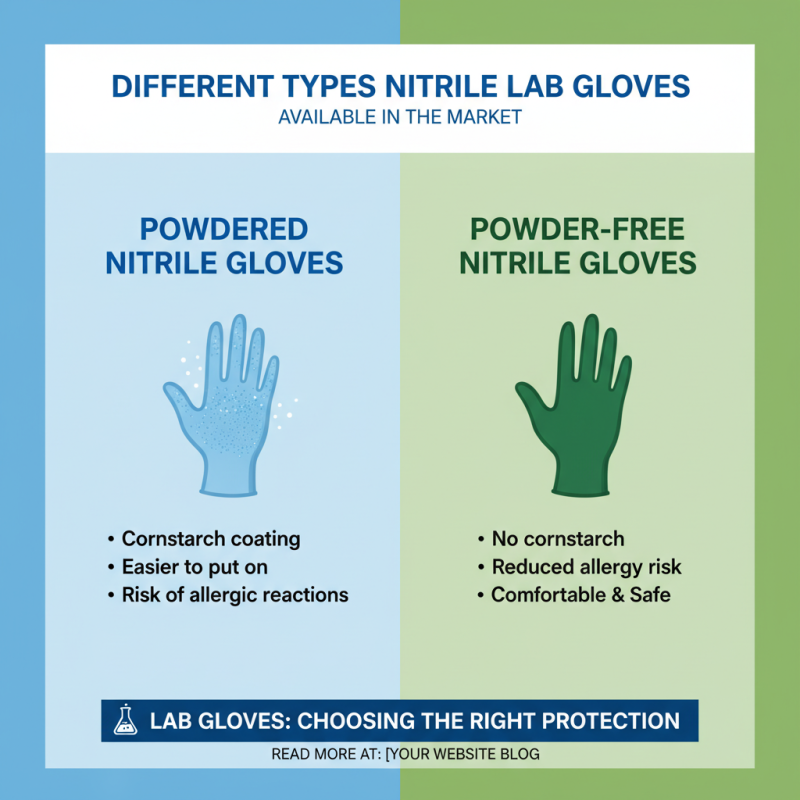
Nitrile lab gloves come in various options, catering to different needs. The most common types include powdered and powder-free nitrile gloves. Powdered gloves have a corn starch coating for easier wearing. However, some users may have allergic reactions to powder. Powder-free gloves reduce this risk, offering comfort and safety.
Another consideration is thickness. Thinner gloves provide flexibility, making them suitable for tasks requiring dexterity. However, they might not offer the same level of protection against chemicals. Thicker gloves offer robustness but can limit tactile sensation. Choosing the right thickness depends on the specific tasks at hand.
There are also different textures available. Some gloves have textured fingertips for better grip. This is crucial when handling small or slippery items. Meanwhile, smooth gloves are easier to slide on. Reflecting on these details will help users find gloves that perfectly fit their needs. Balancing comfort, protection, and functionality is key.
When choosing nitrile lab gloves, comfort is essential. The thickness of the gloves plays a crucial role. Thin gloves offer dexterity, while thicker options provide better protection. A balance is necessary depending on the task. For intricate tasks, thinner gloves are ideal; they allow for better tactile sensation. However, if working with harsh substances, go for thicker gloves.
Size matters too. A snug fit prevents slipping and enhances grip. However, overly tight gloves can lead to discomfort and reduced circulation. If your gloves feel restrictive, consider a larger size. Measure your hands accurately to ensure the right fit.
Reflect on your typical lab activities. Nitrile gloves come in various sizes and thicknesses. Analyze your needs carefully. It is about finding that sweet spot for comfort and protection. Listen to your body while working. Taking breaks can also help if discomfort arises. The right choice of Gloves Nitrile can significantly impact your efficiency in the lab.
When budgeting for nitrile lab gloves, consider factors beyond just price. Quality and safety should never be compromised. Premium Nitrile Hand Gloves may cost more, but they provide better protection against chemicals. Investing in higher-quality gloves can save money in the long run by reducing the risk of contamination and potential injuries.
It's also essential to evaluate the quantities needed for your specific tasks. Bulk purchasing can lower the per-pair cost, yet it could lead to excess inventory if not carefully assessed. Think about your actual usage patterns. Are you often changing gloves? Opting for a less expensive option might be tempting but could result in higher costs due to damage or inadequate protection.
Understand the market dynamics. Some suppliers offer competitive pricing, while others may focus on premium products with additional features. Research thoroughly, compare different suppliers, and read reviews. Finding reliable nitrile hand gloves within your budget requires time and attention to detail. Even modest adjustments to your purchasing strategy can yield significant savings.
When selecting nitrile gloves, understanding chemical resistance is crucial. Many labs require gloves to handle various substances. Nitrile gloves stand out for their durability and resistance to many chemicals. However, not all nitrile gloves offer the same level of protection. Be mindful of the specific chemicals you will encounter. Always check compatibility charts for the materials you will be using.
Consider the environment where the gloves will be used. For instance, if you handle solvents or oils, Nitrile Food Gloves can be particularly effective. These gloves can withstand exposure and prevent contamination. But, they may not be suitable for harsh acids or alkalis. That’s a limitation worth reflecting on, especially when accuracy is critical.
Another factor is the thickness of the gloves. Thicker gloves often provide better protection but may reduce dexterity. It is essential to find a balance between safety and comfort. An uncomfortable glove can compromise your focus and efficiency. Therefore, testing different types can reveal what works best for your specific needs. Nitrile gloves are reliable, but they aren’t one-size-fits-all solutions, requiring careful consideration.
When selecting nitrile lab gloves, user reviews reveal key insights into popular brands. Testimonials highlight that comfort and fit play a crucial role. Many professionals indicate that gloves should provide both protection and dexterity. Studies suggest that proper glove fit can reduce hand fatigue during extended use.
Tip: Always consider the thickness of nitrile gloves. Thicker gloves offer more protection but may reduce tactile sensitivity. Balance between safety and feel is vital.
Users also mention durability as a key factor. High-quality nitrile gloves resist tearing and enhance longevity. Reports indicate that gloves with certain textured surfaces improve grip, especially in wet conditions. However, not all gloves perform equally well under various chemical exposures.
Tip: Always conduct a compatibility test when working with hazardous substances. This simple step can prevent accidents and improve safety.
In the realm of aesthetics, many users have responded positively to different colors. For instance, Pink Nitrile Gloves are noted for appealing to those wanting both style and functionality. The right color can enhance visibility and even boost morale in a lab setting. Yet, personal preferences vary widely.
Disposable nitrile gloves are an essential tool for everyday household tasks, offering practical benefits that enhance both safety and efficiency. The nitrile material is specifically designed to withstand chemical corrosion, making it an ideal barrier against a variety of cleaning agents and disinfectants commonly used in household chores. This feature is particularly important for individuals concerned about skin irritation or allergic reactions, as nitrile gloves provide a safe alternative to latex gloves.
In addition to their protective capabilities, nitrile gloves are known for their high elasticity, which ensures a snug fit without sacrificing comfort. This flexibility makes them suitable for high-frequency tasks such as kitchen cleaning and bathroom disinfection. Whether washing dishes, scrubbing surfaces, or sanitizing items, disposable nitrile gloves allow for dexterous movements, enabling users to perform tasks with precision. Their durability also means they can withstand wear and tear, making them a reliable choice for a variety of cleaning applications around the home.
: The common types are powdered and powder-free nitrile gloves. Powdered gloves have a corn starch coating for easier wearing.
Think about dexterity and protection. Thinner gloves allow flexibility, while thicker gloves offer better chemical defense.
A snug fit improves grip. However, overly tight gloves can cause discomfort. Measure hands accurately to find the right size.
Analyzing your tasks helps identify the right thickness and size. Balancing comfort and protection is essential to efficiency.
Consider quality, safety, and quantity needed. Higher-quality gloves may cost more but offer better protection in the long run.
Buying in bulk can reduce per-pair costs but may lead to excess inventory if usage patterns aren’t assessed properly.
Textured gloves provide better grip, crucial for small or slippery items. Smooth gloves are easier to wear but may lack grip.
If your gloves feel restrictive, try a larger size. Discomfort can hinder your work efficiency; listen to your body.
Yes, some users may experience allergic reactions to the powder. Powder-free options reduce this risk while offering comfort.
Research suppliers, compare prices, and consider using bulk options. Small adjustments can significantly impact your overall budget.
In selecting the best Nitrile Lab Gloves for specific needs, several key factors must be considered. Understanding the properties and benefits of nitrile material is essential, as it offers superior chemical resistance and durability compared to other glove materials. Various types of nitrile lab gloves are available in the market, catering to different applications. Assessing the thickness and size of the gloves is crucial for ensuring comfort and dexterity during use.
Cost considerations also play a significant role when budgeting for nitrile lab gloves. Users should evaluate not only the price but also the quality and performance of the gloves to ensure they provide adequate protection. Additionally, examining user reviews can provide valuable insights into the overall satisfaction and effectiveness of different nitrile glove options, aiding in make an informed decision for laboratory safety and efficiency.